
Installing Python#
Installing Python on a Windows Machine#
There are three possible ways to install Python on a windows machine:
Through the microsoft store: The most straightforward way to install Python on a windows Machine.
Through the Python website: This is the most common way to install Python on a windows machine.
Through Anaconda: Anaconda is a distribution of Python that comes with a lot of packages pre-installed. This will include the standard library and additional external packages that we will introduce and use toward the end of the book.
Before we get started, let’s check if Python is already installed on your machine. Open your start menu by clicking the Windows key on your keyboard. Then type in powershell and open the application (if you can’t find powershell, type in command prompt instead and open that). You should have cool terminal open that makes you feel like a hacker!
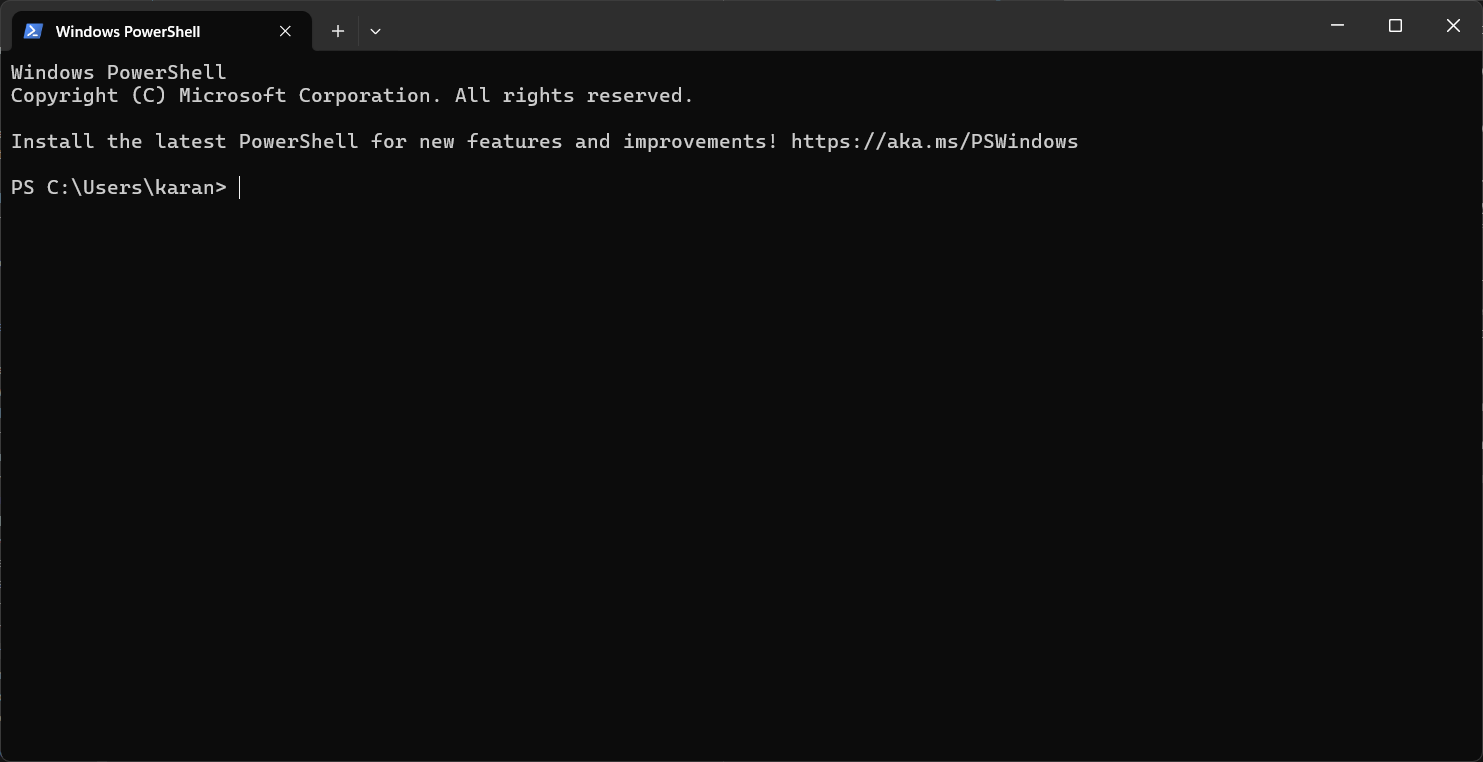
In the terminal, type in python --version and press enter
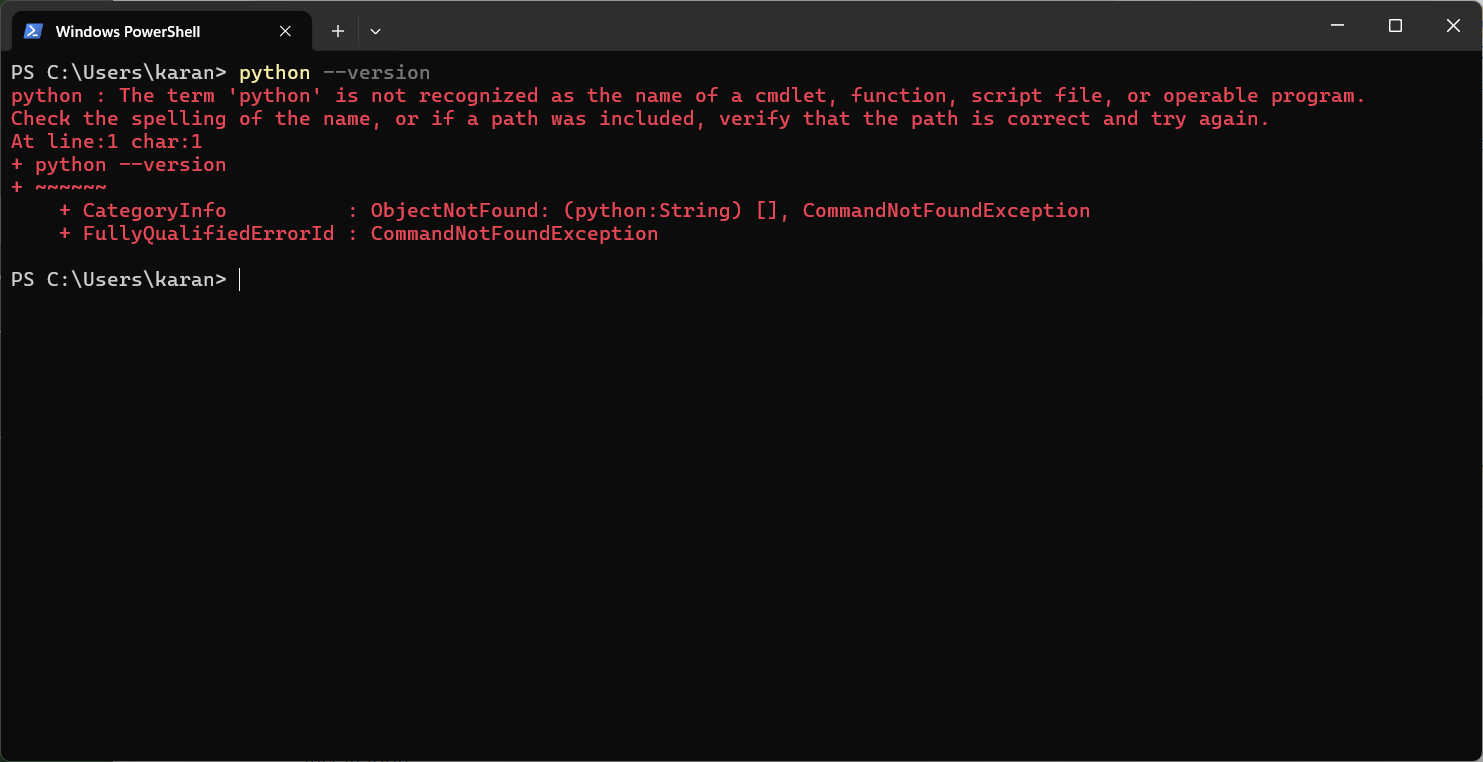
If you do not have python installed, you would proceed to install it in one of the following ways.
Installing Python through the Microsoft Store (Windows 10 or 11)#
Go to the Microsoft Store from your start menu and search for Python.
a. You will find multiple versions of Python, but for this course we will be using Python 3.XX
Install the python version by clicking the
Getbutton.Once installed, go back to
powershell/command promptand type inpython --versionorpy --versionto confirm that Python has been installed. If it is installed, you will see something like this: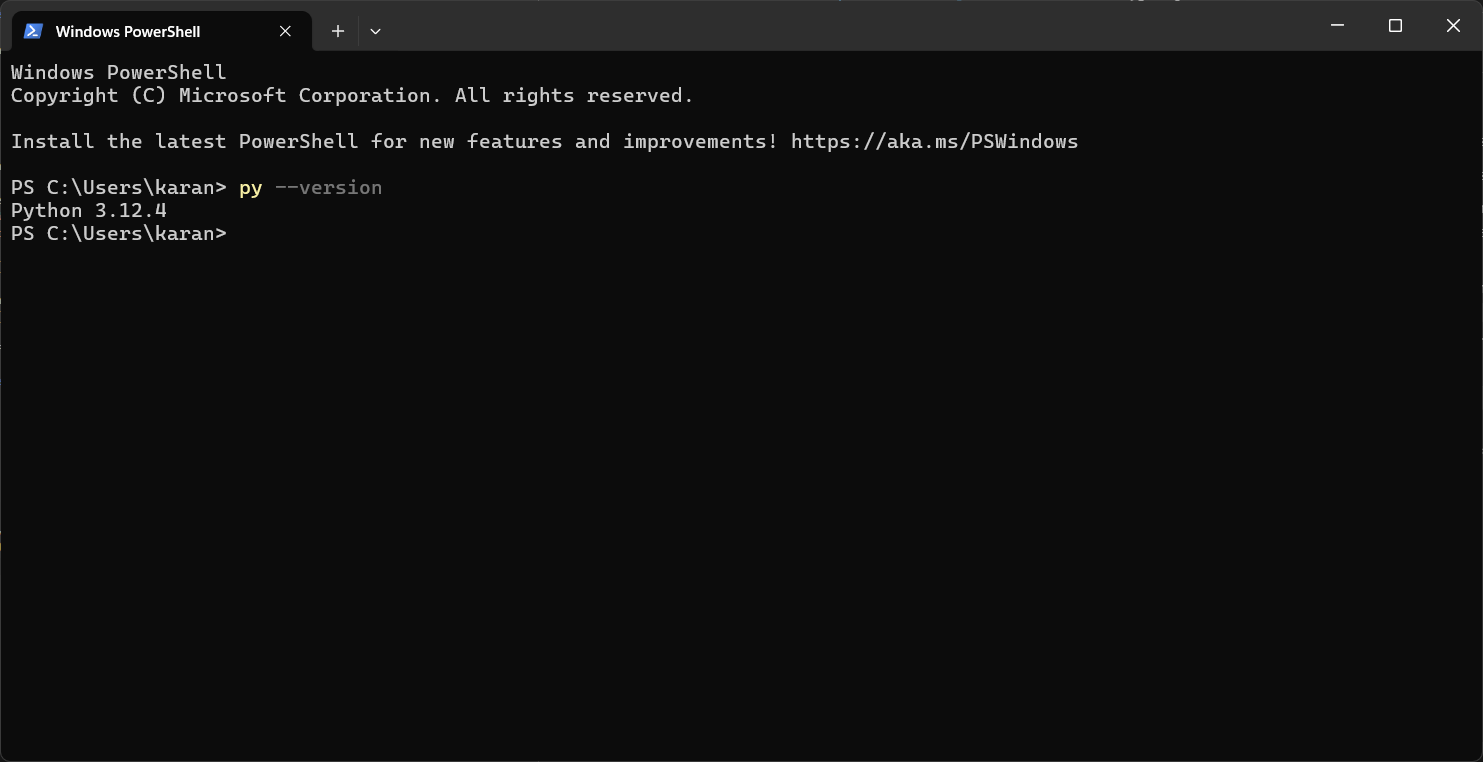
You should be good to go! You now have access to Python in the terminal and Python’s IDLE (Integrated Development and Learning Environment).
A quick note about the Microsoft Store install of Python:
According to official docs from the Python Software Foundation the Microsoft store installation of python is an easily installable version directed for interactive use cases, specifically for Students. For the purposes of this textbook, the Microsoft Store installation of Python is sufficient, however do note that there are issues with the redirection of local data, registry and temporary paths that may prevent you from write access to certain file locations. It is unlikely that anything in this textbook will require you to modify any such data, but if you run into this issue, you may want to consider the Full installation of Python through their official website which we will highlight below.
Installing Python through the Python Website#
Go to the Python website
Click on the download button to download the latest version of Python.
Launch the installer and you should see a screen that look similar to this:
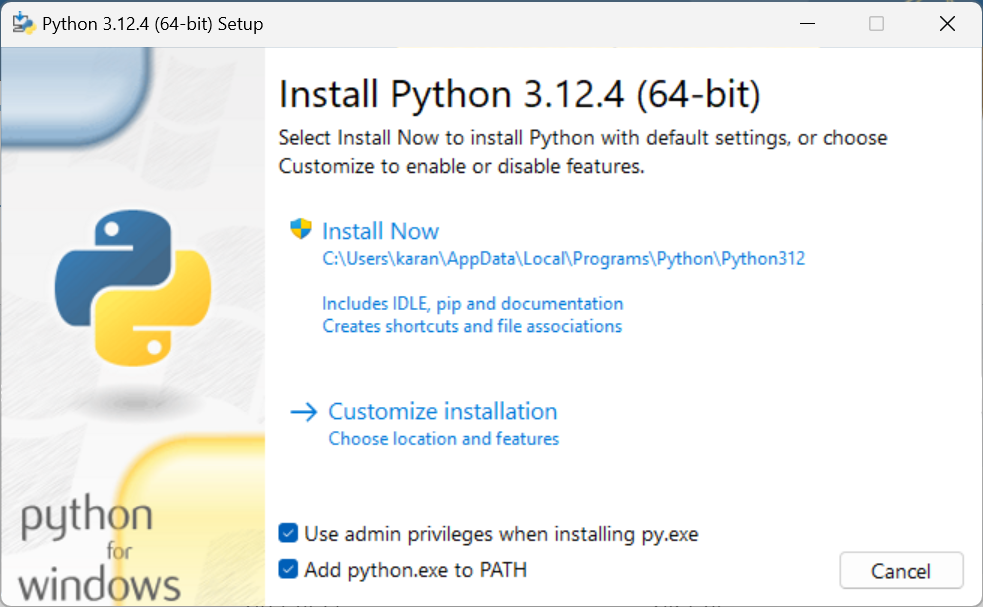
Make sure to check the box that says
Add Python to PATHand clickInstall Now.You should be able to go into Powershell/Command Prompt and type in
python --versionorpy --versionto confirm that Python has been installed.
Installing Python on a Mac#
As with Windows, before we install anything, let’s check whether Python is already on your machine. Open your Terminal by going to Finder -> Applications -> Utilities -> Terminal (or press Cmd + Space and type Terminal). Then, type in python3 --version and press enter.
If you see something like Python 3.12.2, Python 3 is already installed and you’re good to go!
A note before you do this: on a Mac that has never had developer tools installed, typing python3 may cause a pop-up asking if you’d like to install the “command line developer tools”. If you click Install, macOS will install a version of Python 3 for you (along with some other useful tools) - a perfectly fine option! If you’d rather install Python directly, click Cancel and follow the instructions below.
There are two common ways to install Python on a Mac:
Through the Python website: The most straightforward and most common approach.
Through Homebrew: A good option if you already use the Homebrew package manager.
Installing Python through the Python Website#
Go to the Python website. The site will detect that you’re on a Mac and offer you the latest version of Python.
Click the download button to download the macOS installer.
Open the downloaded
.pkgfile and follow the prompts in the installer (Continue, agree to the license,Install). You may be asked for your password.Once the installer finishes, open a new Terminal window and type in
python3 --versionto confirm that Python has been installed.
A quick note about python vs python3 on a Mac:
On Macs, you’ll want to get in the habit of typing python3 (rather than just python) to launch Python, as the python command may not be defined (or, on older machines, may point to a very old Python 2 installation that you do not want to use). Similarly, use pip3 anywhere this book says pip.
Installing Python through Homebrew#
Homebrew is a popular package manager for macOS - a command line tool for installing software. If you already have Homebrew installed, you can install Python with a single command in your Terminal:
brew install python
Once it finishes, confirm the installation with python3 --version.
If you don’t already use Homebrew, we recommend sticking with the Python website installation above - it’s simpler, and there’s no need to install a package manager just for this.